
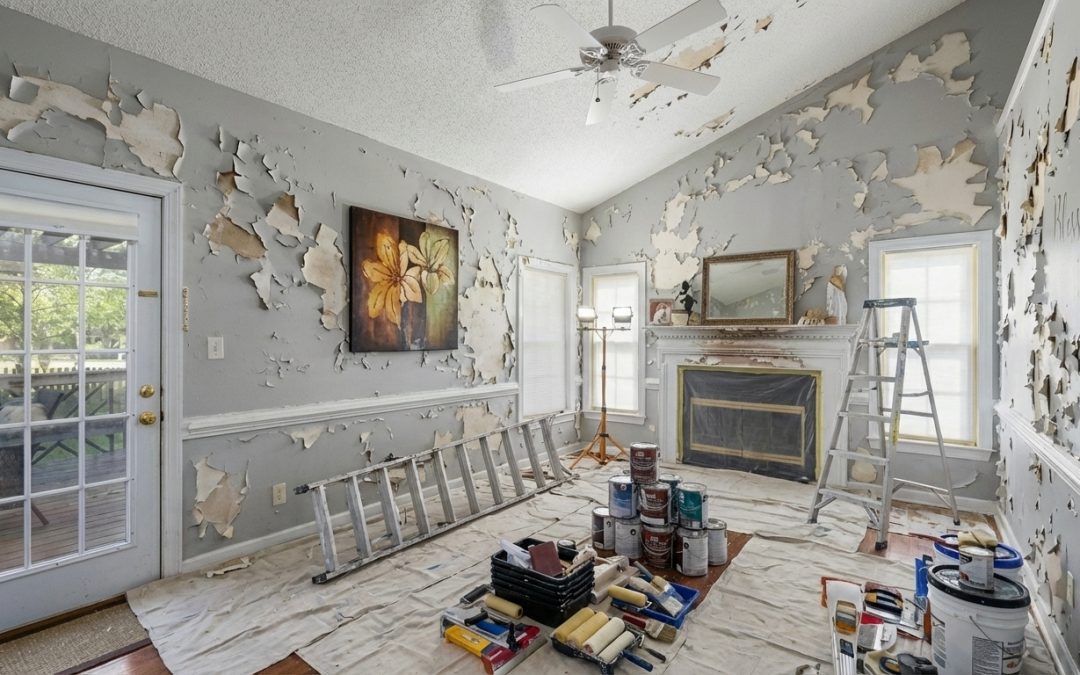
If your interior paint is peeling, it’s not random bad luck. There’s always a reason. And once you know what it is, the fix is usually pretty straightforward.
I’ve been painting houses across Auckland for over 15 years, and peeling interior paint is probably the most common thing homeowners call me about. It’s frustrating, especially when the paint job isn’t even that old. You spend money getting the walls done, and six months later, bubbles are forming near the window, or flakes are dropping off in the bathroom.
So let’s get into it. Why does interior paint peel, and what’s actually causing it in Auckland homes specifically?
What Causes Interior Paint to Peel?
Peeling paint usually comes down to one of three things: moisture, poor surface prep, or the wrong product used in the wrong place. Sometimes it’s a mix of all three.
The paint itself is rarely the problem. Nine times out of ten, it’s something that happened before the brush even touched the wall.
Why Moisture Is the Biggest Culprit in Auckland
Auckland’s climate plays a real role here. We get a lot of humidity, especially in summer. Homes that don’t ventilate well trap moisture inside, and that moisture has to go somewhere. Often, it goes behind your paint film.
When moisture builds up between the paint and the wall surface, the bond breaks. The paint lifts. It bubbles first, then peels. You’ll usually notice this in bathrooms, kitchens, and around windows first because those areas produce the most humidity.
QUICK ANSWER
Interior paint peels when moisture gets trapped between the paint film and the surface, breaking the adhesive bond. In Auckland’s humid climate, this is especially common in bathrooms, kitchens, and poorly ventilated rooms.
Older Auckland homes, particularly villas and bungalows, often have timber framing that breathes differently from modern construction. Moisture moves through the walls in ways that newer builds don’t experience. If a painter didn’t account for that, it shows up later as peeling.
How Poor Surface Preparation Leads to Peeling
This one is on the painter, not the house. Surface prep is everything. If walls weren’t cleaned properly, if old flaking paint wasn’t sanded back, if there was grease or dust on the surface when the primer went on, the new paint never had a proper bond to begin with.
A lot of DIY jobs, and honestly, some cheap contractor jobs too, skip or rush the prep. It looks fine at first. But within a year or two, especially in high-traffic areas or humid environments, the paint starts to peel.
-
- Painting over glossy surfaces without sanding first
- Skipping primer on raw plaster or repaired areas
- Painting over damp walls (common mistake after a leak)
- Not cleaning the surface before painting (dust, grease, mould residue)
Any one of these will cause problems. And honestly, the damage usually shows up right when the paint should still look good, which makes it even more annoying.
Why Using the Wrong Paint Type Causes Problems
There’s a reason paints are labelled for specific rooms. Bathroom paint has additives that resist mould and handle moisture cycling. Kitchen paint is formulated for areas that are frequently wiped down. Using standard wall paint in a bathroom because it’s what you had left over is a common shortcut that comes back to bite people.
Water-based and oil-based paints also don’t play well together unless the surface is prepared specifically for them. Painting a water-based topcoat over an old oil-based surface without the right primer can cause adhesion failure, and that looks exactly like peeling from moisture, but the fix is different.
| PAINT ISSUE | WHERE IT SHOWS UP | HOW TO TELL |
| Moisture behind the film | Bathrooms, kitchens, near windows | Bubbling before peeling, often in sheets |
| Poor adhesion / no primer | Repaired patches, new plaster | Peels cleanly in large pieces |
| Wrong paint type | High-humidity rooms | Flaking, mould underneath the paint |
| Oil over water (or vice versa) | Any room with old paint | Paint curls or wrinkles as it peels |
What About Mould Under the Paint?
Mould is a separate issue that often gets confused with peeling. If you see dark spots under or through the paint, especially in corners or behind furniture, that’s mould growth, and paint peeling on top of it is a symptom of the bigger problem, not the cause.
Painting over mould without treating it first is one of the most common mistakes I see. It looks fine for a few weeks, then the mould pushes through, the paint bubbles, and you’re back to square one. The mould has to be properly treated and the source of moisture addressed before any repainting occurs.
REAL-WORLD EXAMPLE
A client in Ponsonby had peeling paint in every room of their 1930s villa. Turned out the roof had a slow leak for years that had never been fully fixed. Moisture was tracking through the ceiling and walls. We repainted twice before anyone found the actual source. Third time, we stripped everything back, fixed the leak properly, let everything dry for weeks, then primed and repainted. That job has held up for four years now.
When a House Has Been Repainted Too Many Times
This one surprises people. If a wall has had layer after layer of paint applied over decades without ever being stripped back, the cumulative weight and tension of those layers can cause the whole thing to start failing. The older layers lose flexibility, the top layers can’t stretch with the wall’s natural movement, and eventually the wall cracks and peels.
Older Auckland homes are particularly prone to this. A villa that’s been repainted every five to ten years for eighty years has a lot of paint on those walls. At some point, the right answer is to strip it back to bare plaster and start again, not just add another coat.
Common Mistakes That Make Peeling Worse
Painting in cold or damp conditions. Paint needs to cure properly. Applying it when it’s cold or humid slows curing and weakens the bond.
Skipping the second coat. A single coat on porous surfaces often doesn’t create a proper barrier against moisture.
Using cheap paint to save money. Low-quality paint has less binder, which means weaker adhesion. It’ll peel faster, especially in humid rooms.
Not fixing the source of moisture first. Repainting without fixing the leak, condensation issue, or ventilation problem means you’ll have to do it again in a year.
Painting over peeling paint instead of removing it. The new paint will only hold as well as what it’s sitting on.
How to Actually Fix Peeling Interior Paint
The right fix depends on the cause, but the general process goes like this:
-
- Find and fix the source of moisture if that’s the issue. Don’t skip this step.
- Remove all loose and peeling paint, either by scraping or sanding. Get back to a solid surface.
- Fill any cracks or holes with appropriate filler and let it dry fully.
- Sand smooth and clean it.
- Apply a quality primer suited to the surface type and room conditions.
- Use the right paint for the room. Bathroom and kitchen areas need moisture-resistant products.
- Apply two coats, allowing proper drying time between each.
If you’re dealing with widespread peeling across multiple rooms, or if there’s any sign of mould, it’s genuinely worth getting a professional in to assess it first. Repainting without knowing the cause just delays the problem.
Peeling interior paint is annoying, but it’s not mysterious. There’s always a reason, and most of the time it traces back to moisture, prep, or the wrong product. Get those three things right and the paint stays up. It really is that simple, even if the fix itself takes some work.
If you’re in Auckland and dealing with peeling paint that keeps coming back, it might be time to have someone take a proper look at what’s actually going on behind the surface.
FAQ
Q: Can peeling paint cause health problems?
Ans: Yes. Peeling paint can trap dust, mould spores, and in older homes, lead, which may affect breathing or trigger allergies. (Source: Childhood Lead Poisoning Prevention)
Q: How long should walls dry after a leak before repainting?
Ans: Walls need to be fully dry, usually one to two weeks depending on humidity, before priming and painting.
Q: Can I fix small peeling spots myself?
Ans: Yes. Scrape loose paint, sand smooth, apply primer, and repaint. Large or repeated peeling is best checked by a professional.