

Plastering Auckland for Commercial Spaces: A Complete Guide
When people think about upgrading a commercial space, they usually picture signage, new lighting, or a fresh coat of paint. But in reality, the finish that makes everything look “high-end” is often the quality of the Plastering Auckland professionals provide.
In Auckland, where commercial buildings deal with humidity, coastal air, tenant wear and tear, and constant foot traffic, good plastering is not just cosmetic. It’s the foundation for clean walls, crisp lines, durable corners, and a professional look that holds up under pressure.
In this guide, we’ll walk through how commercial plastering works in Auckland, what options you have, what to watch out for, and how to choose a contractor who can deliver a smooth finish on time.
Why plastering matters more in commercial spaces than most people realise
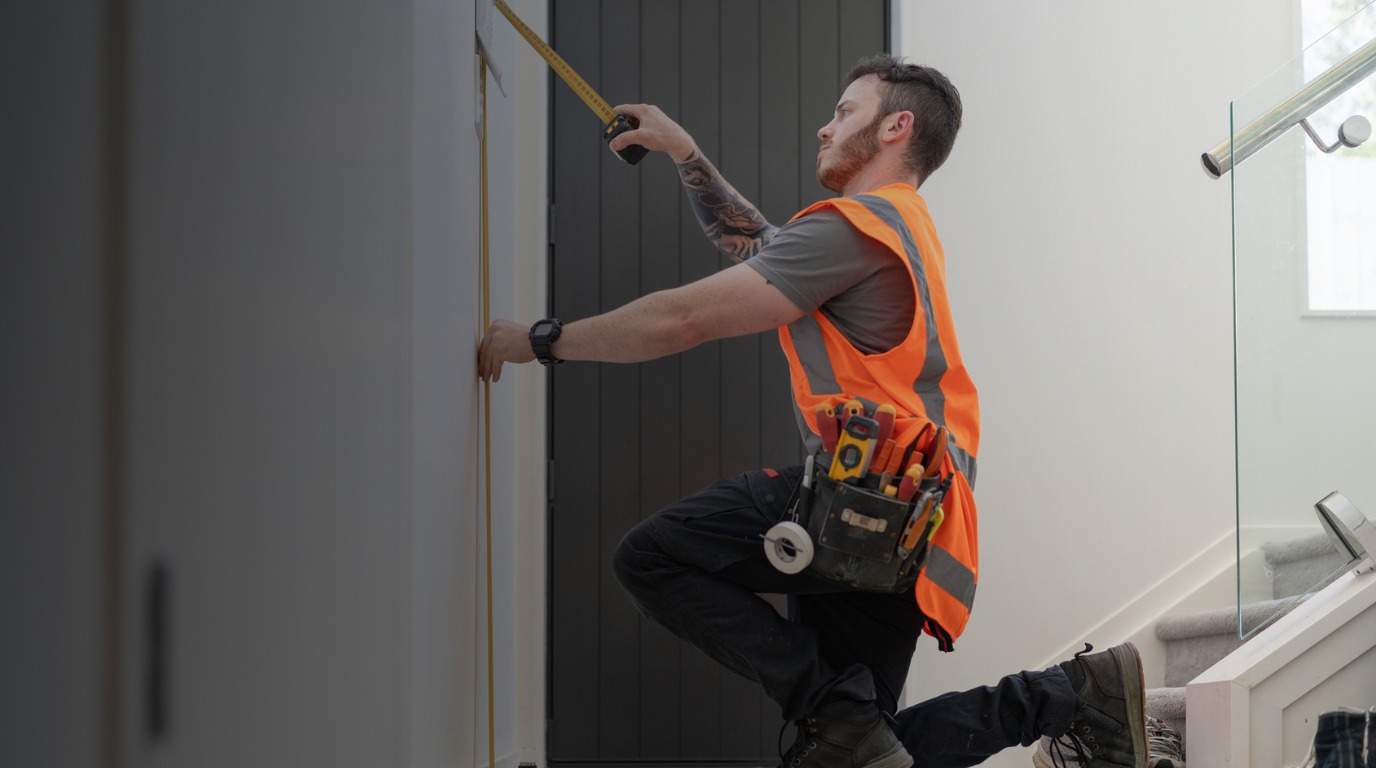
A commercial interior gets judged fast. Clients notice it. Staff feel it. Tenants complain about it. And if you’re a property manager, you already know how quickly “minor wall issues” become recurring maintenance tickets.
Quality plastering helps you in a few big ways.
First, it creates the smooth, consistent surfaces needed for high-quality paint finishes, feature walls, and branded interiors. Second, it strengthens vulnerable areas like corners and joins, which take the most damage. Third, it reduces ongoing patchwork because the finish is built properly in the first place.
For Auckland commercial spaces in particular, plastering is often what separates a “quick refresh” from a fit-out that looks genuinely premium. This is where RNF Construction comes into play. Their expertise in commercial plastering ensures that your space not only looks good but also withstands the test of time and usage.
Common commercial spaces in Auckland that need plastering (and why)
Commercial plastering is not one-size-fits-all. Different spaces get different kinds of damage and have different expectations for finish.
A few common examples we see around Auckland include offices where wall changes and cable updates leave patches everywhere. Retail stores often need fast turnaround between tenants and strong corner protection for trolleys and stock movement. Hospitality spaces, like cafés and restaurants, usually need moisture-aware materials in kitchens and wash areas plus sharp detailing under feature lighting. Warehouses and industrial sites tend to need durable, repair-friendly surfaces rather than ultra-perfect Level 5 finishes.
If your space is customer-facing, wall quality plays a bigger role than you think. Lighting in modern commercial interiors makes imperfections very obvious.
Plastering vs gib stopping: what’s the difference?
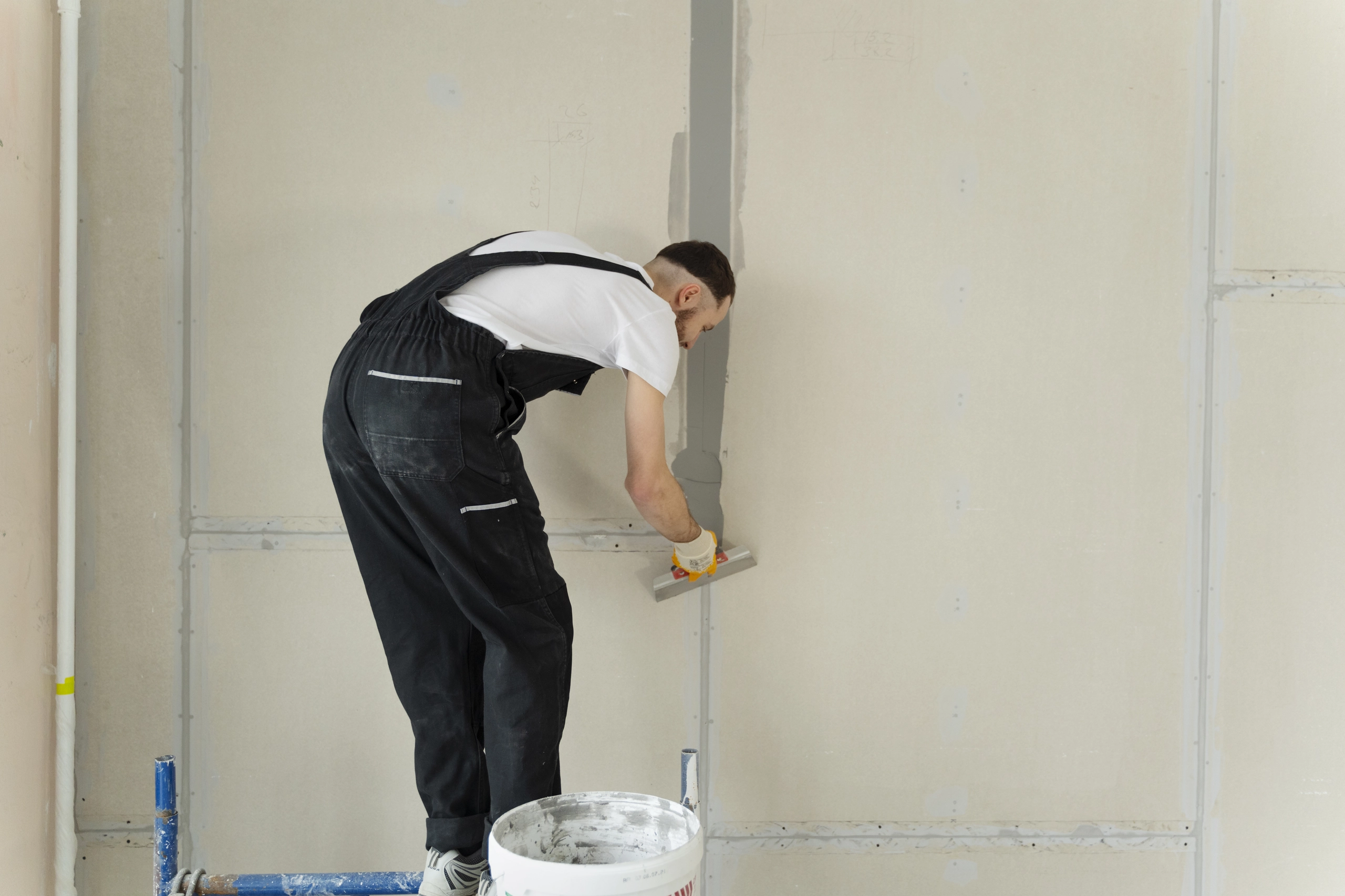
In New Zealand, “plastering” often gets used as an umbrella term. For commercial interiors, the key part is usually gib stopping, which is the process of sealing plasterboard joins with compound and tape, then building up layers to create a smooth wall ready for paint.
Plastering can also refer to skim coating, solid plaster repairs, and specialty finishing. The right approach depends on what your walls are made of and what level of finish you need.
If you’re doing a commercial repaint, getting the stopping and plaster prep right is what prevents flashing, shadowing at joins, and visible patch outlines after painting.
Types of plastering used in Auckland commercial projects
Most commercial jobs fall into a few categories, and each one has different cost, time, and performance implications.
1) New gib stopping for fit-outs and renovations
This is the classic fit-out scenario. Fresh plasterboard goes up, then stopping follows in multiple coats, sanding between stages, and finishing to the paint-ready level required for the space.
2) Skim coating to level out older walls
If walls are uneven, previously patched, or textured, a skim coat can be used to create a consistent surface. This is common when upgrading older offices or retail spaces where you want a modern flat-wall look.
3) Patch repairs and maintenance plastering
This is ideal for ongoing building maintenance. Think dents, holes from signage, accidental damage, water staining repairs once the cause is fixed, and tenant wear.
4) Solid plaster repairs (where relevant)
Some commercial buildings still have solid plaster areas. Repairs here need correct material matching, careful prep, and proper curing, especially in Auckland’s coastal conditions.
What “good” plastering looks like in a commercial environment
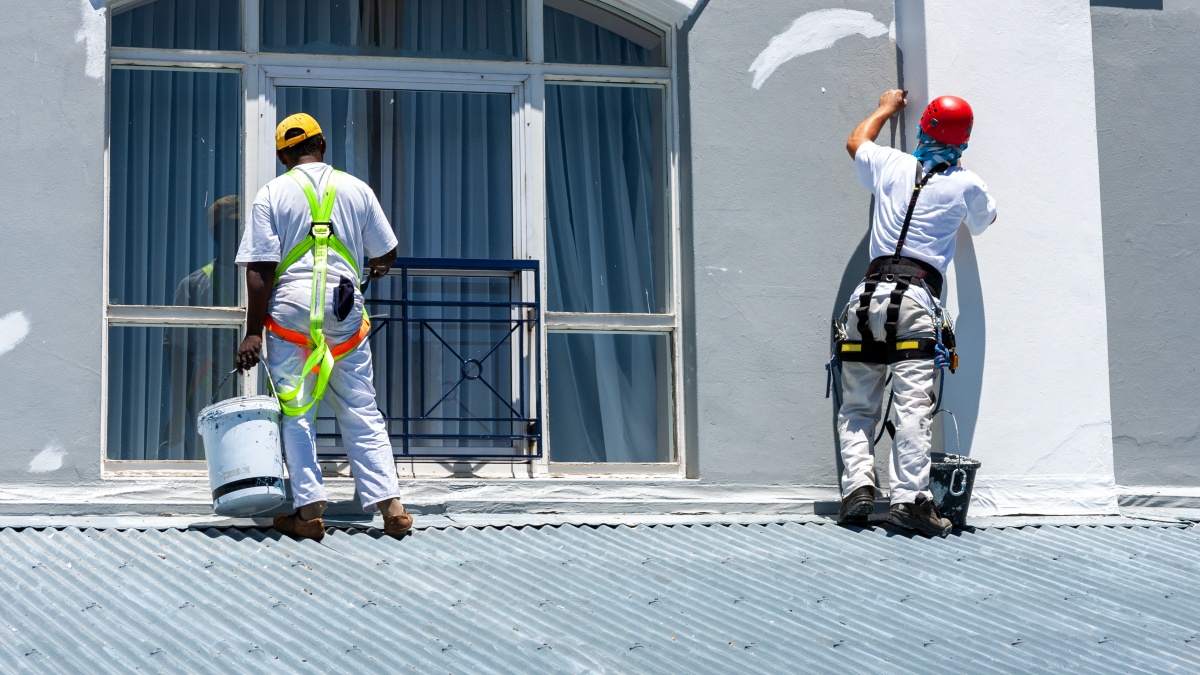
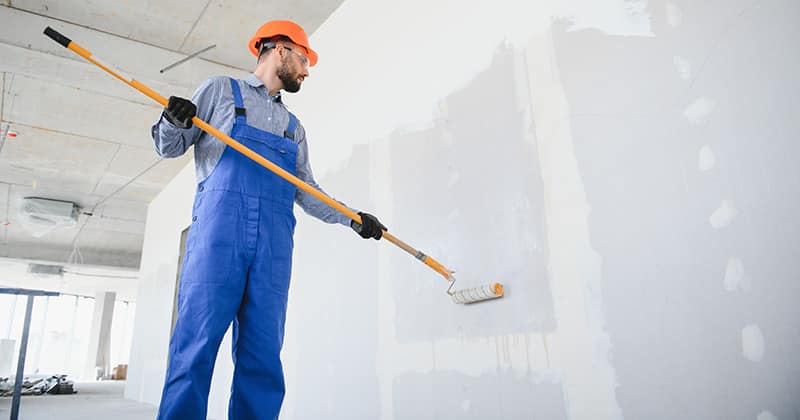
Painters working in the bright sunshine
The best commercial plastering is the kind you don’t notice. Everything looks straight, smooth, and consistent under lighting, including downlights and natural daylight from glazing.
You should expect clean corners, flat walls without ripples, no visible tape lines, and no sanding marks telegraphing through paint. On repaints, good plasterers feather repairs properly so patches disappear after priming and finishing coats.
A big one for commercial spaces is durability. Busy corridors, service areas, and entries should be reinforced correctly, not just “made to look good” for handover day.
The commercial plastering process (step-by-step, Auckland style)
Most projects follow a predictable flow, but timelines depend on drying conditions, access, and the scale of the fit-out.
First comes site assessment and scope. This is where you define surfaces, damage level, finish requirements, access hours, and how the job will be staged around tenants or other trades.
Next is prep. That includes surface cleaning, removing loose material, sealing where needed, protecting floors and fixtures, and ensuring boards are fixed correctly. Prep is where many cheap jobs fall apart.
Then comes taping and base coats for joins, internal corners, and fastener points. After that, additional coats build the wall to the required finish level. Sanding happens between coats and at the end to refine the surface. Finally, the walls are checked under proper lighting before primer and paint.
Drying time matters in Auckland. Humidity can slow things down, so good planning and ventilation are part of professional delivery.
Commercial finish levels: the part most people skip (but shouldn’t)
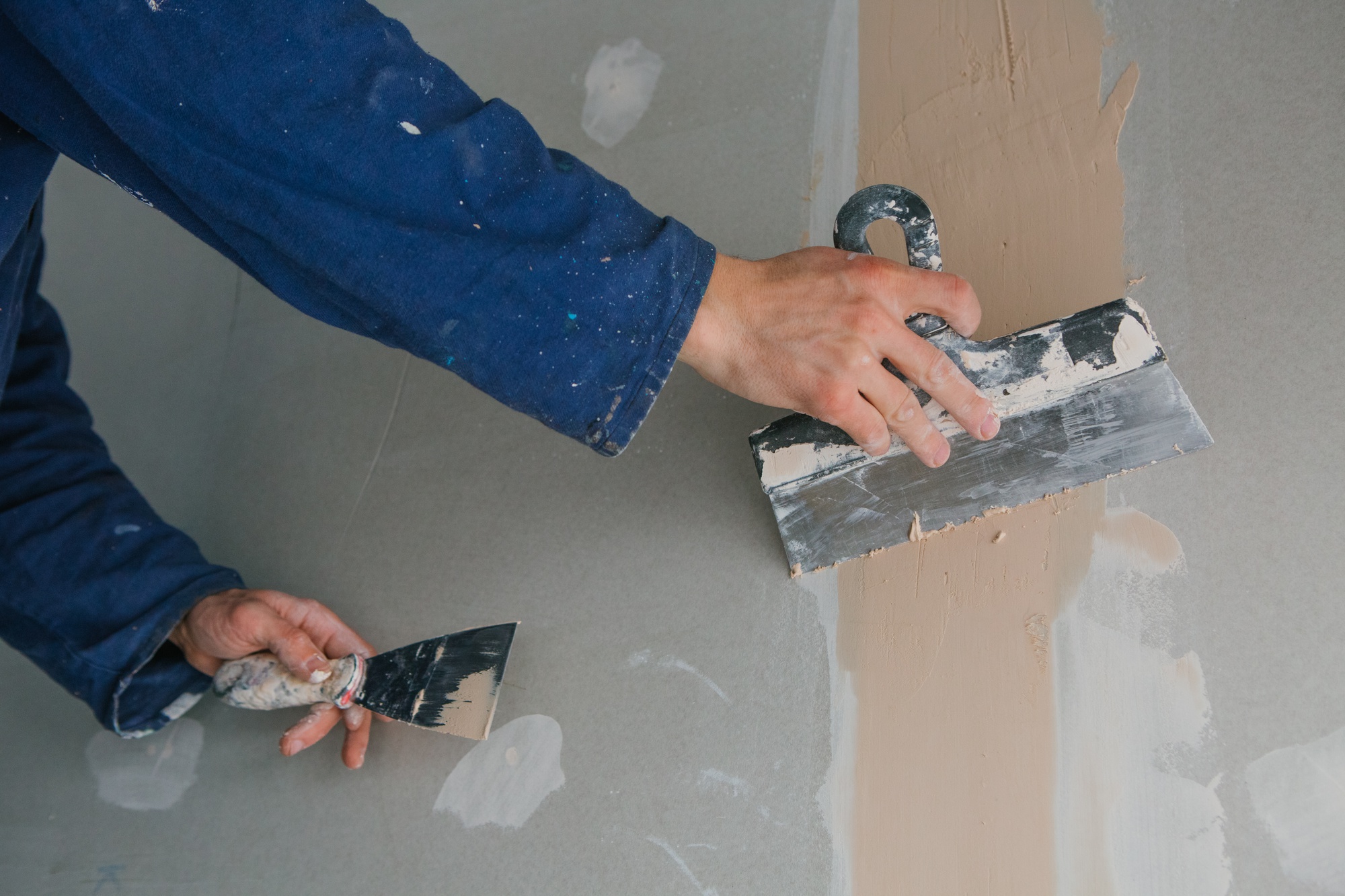
Not every wall needs a museum-quality finish. But you do want the right finish for the right space.
In simple terms, higher finish levels take more labour, more coats, and more sanding. Offices with bright lighting, glossy paints, or feature walls often need higher-level finishing than back-of-house service rooms.
If you’re unsure, the safest approach is to decide based on lighting, paint sheen, and visibility. A wall behind a reception desk is different from a storeroom wall.
A professional plasterer will guide you here and set expectations early so there are no awkward surprises at the end.
Auckland-specific considerations that affect plastering
Auckland has a few local realities that influence commercial plastering outcomes.
Humidity is a constant factor. It affects drying times and can cause issues if coatings are rushed. Coastal air in some areas can add corrosion considerations for fixings and corner beads. Many commercial buildings also have HVAC systems that can either help drying or create airflow issues that affect dust management during sanding.
Then there’s logistics. Auckland CBD access, parking, loading zones, and restricted work hours can make planning just as important as workmanship. If plastering is part of a larger fit-out, coordination with electricians, data installers, and painters becomes critical.
This is why commercial plastering is usually less about “can you plaster?” and more about “can you deliver a clean finish while coordinating a job site?”
Mistakes that cause most plaster failures in commercial buildings
A lot of plastering issues don’t show up until after paint goes on, or worse, after tenants move in and the space starts getting used.
Here are the most common causes:
- Poor prep (dusty surfaces, weak edges, loose old material not removed)
- Rushed coats and insufficient drying time
- Inadequate feathering on repairs leading to visible patch edges
- Incorrect primer selection causing flashing or uneven sheen
- Weak corners and edges in high-traffic zones
In commercial projects, the cost of rework is not just labour. It’s delayed handover, unhappy tenants, and operational disruption.
How to choose a plastering contractor in Auckland for commercial work
It’s tempting to choose based on price alone, especially when you’re managing a bigger project. But commercial plastering is one of those trades where cheap often becomes expensive later.
When selecting a plastering contractor, consider these 10 things that can guide you to make an informed decision. Look for a team that can show commercial examples, explain their process clearly, and commit to timelines without overpromising. Ask how they manage dust, how they handle drying in humid conditions, and how they coordinate with painters for a clean final finish.
At RNF Construction, we’re big on systems and communication. We assign a dedicated project manager, follow proven processes for consistent results, and finish with a detailed walkthrough so the handover is clean and predictable.
Plastering and painting go together (and should be planned together)
Plastering sets the surface. Painting reveals the surface.
That’s why commercial projects run smoother when plastering and painting are coordinated as one workflow. The plastering needs the right primer, the painter needs a properly cured and dust-free surface, and the finish needs consistent lighting checks before sign-off.
If your repaint is meant to impress clients or help secure a tenant quickly, don’t treat plastering as an afterthought. It is the hidden layer that makes the final look feel expensive.
Ready to get your commercial plastering done properly?
If you want a commercial space in Auckland that looks sharp, feels professional, and stays that way, the finish starts with the plastering.
At RNF Construction, we take ownership from start to sign-off. We plan the job properly, assign a dedicated project manager, follow proven systems, and walk the site with you at the end so nothing gets missed. If you’re tired of patchy walls or visible joins from improper plastering techniques or contractors who disappear mid-job, let’s fix that.
Get a fast quote and a clear plan with RNF Construction today. We’ll keep it seamless, precise, and on time every time.
FAQs
How long does commercial plastering take in Auckland?
Most jobs take a few days to a couple of weeks depending on area size, drying conditions, access hours, and finish level. Auckland humidity can extend drying time, so scheduling should stay flexible.
What’s the difference between plastering and gib stopping?
Gib stopping is the taping, coating, and sanding of plasterboard joins and fixings to create a smooth paint-ready surface. Plastering can also include skim coating, patch repairs, and solid plaster work.
Can you plaster a commercial space after hours or on weekends?
Yes, many commercial projects are staged after hours to reduce disruption, especially in offices, retail, and hospitality. It depends on building rules, noise limits, access, and how dust control will be managed.
Why do plaster patches show through after painting?
Usually it’s poor feathering, uneven sanding, or incorrect priming. Bright lighting and higher-sheen paints make this more obvious. Proper prep, sealing, and consistent finishing eliminate most patch visibility issues.
What finish level do we need for offices or retail stores?
If you have downlights, big windows, feature walls, or low-angle lighting, you typically need a higher finish to avoid visible joins and ripples. Back-of-house areas can often use a simpler, cost-effective finish.
Do you handle both plastering and painting for commercial projects?
Yes, combining plastering and painting under one team simplifies scheduling and accountability. It also helps ensure surfaces are primed correctly and finished consistently, especially when deadlines and handovers matter.